WARDOGS Three-Team Awareness: Read the Fight You Are Not Facing
A fight that appears comfortable against one opponent can become unstable when the other team reaches a different side of the Control Zone. Build a repeatable way to notice that pressure without inventing alliances or abandoning every useful position.
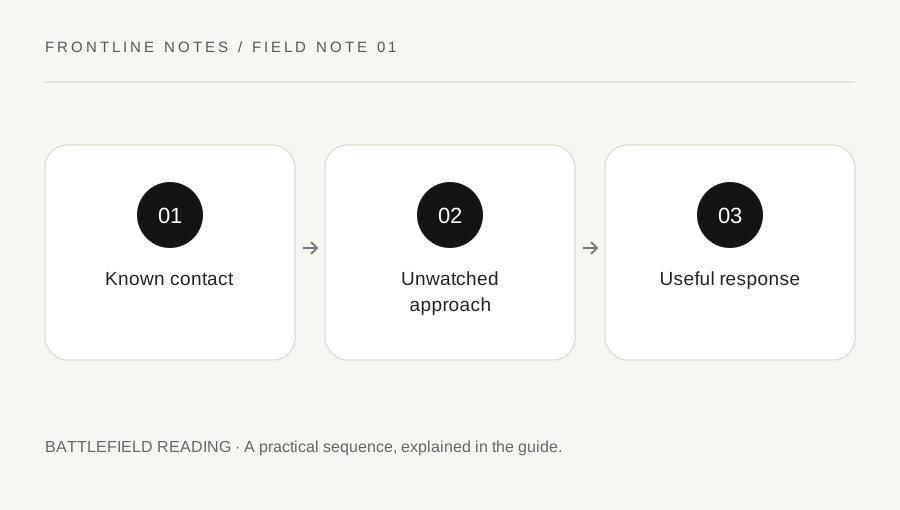
Original explanatory diagram. Examples illustrate a method or decision; they are not claims of personal testing.
Map the missing side
WARDOGS officially describes three competing teams rather than a conventional two-sided frontline. In practice, that means a direction quiet a moment ago can become important while your squad remains absorbed in a visible fight. Begin by naming the contact you can actually see and the approaches you have not checked.
Use terrain descriptions rather than pretending to know every enemy position. "Contact across the road; the warehouse side is unchecked" gives teammates an observation and an uncertainty. "They are all in front" claims more than your evidence supports.
Choose a place from which you can inspect another approach without exposing the squad's entire position. This could be a short look from cover or information from someone already facing that direction. The aim is a useful update, not constant camera movement that prevents you from doing your current job.
Recognize a change before chasing it
A new burst of fire is information, but it does not by itself identify the number, destination or intention of the players involved. Combine sound with the current map, visible movement and teammate reports. Keep confirmed observations separate from guesses.
For example, your squad is fighting across a street when a teammate sees movement behind a nearby industrial building. Instead of sending everyone to pursue it, one player watches the new opening while the others finish disengaging from the exposed street. You have changed coverage without splitting into unrelated missions.
Reassess when destruction opens a new sightline. A side that was physically screened may now expose your position to a team you were not fighting. The strongest response can be a short relocation behind intact cover, even if the original opponent has not advanced. Conditions, rather than attachment to a successful angle, determine its value.
Preserve an exit between opponents
Avoid moving into a narrow space simply because it is protected from the nearest enemy. Ask whether it has another usable exit and whether reaching that exit would cross a different team's line of fire. A position can be safe against one direction yet difficult to leave once pressure develops elsewhere.
Suppose an exterior wall protects you from the first fight, but the only retreat runs into the newly observed approach. Move before both directions become active, if the actual situation allows it. Communicate the destination and the reason: "Leaving the wall for the rear building; second approach is opening."
Do not assume the two opponents will keep each other occupied. They may change focus, move away or both threaten your squad. Your decision should remain useful under those possibilities. Watch the objective state and the squad's ability to contribute rather than waiting for a convenient fight between strangers.
Review attention rather than assign blame
After the sequence, identify the last moment when the new pressure could have been observed safely. Was the approach outside everyone's view, did a call arrive too late, or did the squad receive the information but continue its original plan? These are different corrections.
Try one adjustment next time: assign a temporary rear watch during a crossing, name an unchecked approach in the first contact call, or move immediately when cover is removed. Avoid making permanent surveillance duties that leave a player disconnected from the team.
A useful success measure is whether your squad adapted while it still had choices. Winning every three-way encounter is not realistic. Recognizing the second pressure early enough to regroup, preserve equipment or regain a useful objective position is a concrete improvement. Keep the review tied to one observable decision instead of assuming every loss was an unavoidable sandwich.
A practical checklist
Choices are saved in this browser. Reset them here or clear this site’s browser storage.
Questions that come up
Should we deliberately help another enemy team?
Do not rely on an informal alliance. Make decisions around your own team and the current objective; another team can change its behavior immediately.
Does a quiet approach mean it is empty?
No. Quiet is only the absence of an observation. Mark it as unchecked until you gain useful information.
Should everyone turn toward new movement?
Usually that sacrifices coverage. Communicate first and distribute attention according to the actual pressure.
References & scope
Background references checked on 18 October 2026. Worked examples and diagrams are original teaching material.