WARDOGS Vehicle Teamwork: Transport, Crew Roles and Safer Dismounts
WARDOGS vehicles connect distant spawn areas, objective pressure and logistics. Buying one does not create a useful crew or a safe route automatically. This guide gives original coordination advice for drivers, pilots and passengers using the official combined-arms framework. Reviewed October 18, 2026, it reflects the Season 02 / Update 0.2.0 period. It does not invent vehicle handling tests, damage tables, universal seat counts or an income formula for owning a parked vehicle.
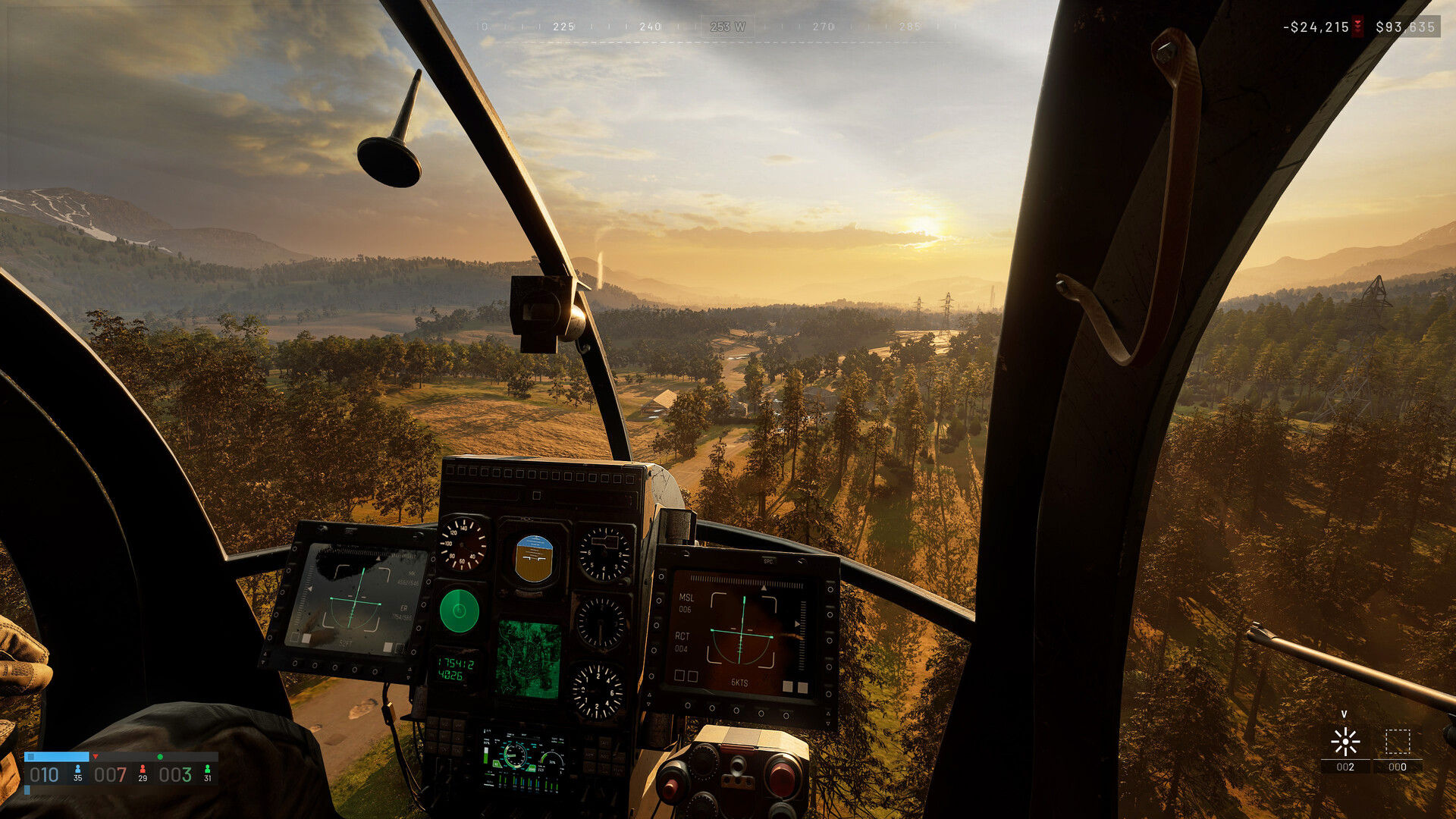
Official game screenshot · Team17. Publisher-provided public store media used to illustrate independent editorial discussion. Copyright remains with the respective rights holders; no redistribution license is offered.
Choose transport or combat before buying
Name the vehicle’s immediate job: carry a ready group, deliver supplies or support a specific fight. These jobs can overlap, but each needs a destination and a reason the vehicle is the appropriate tool. A heavily armed option can be an unnecessary expense for a short, low-risk lift, while an unprotected transport should not be treated as a tank. Inspect the actual variant and its available positions instead of assuming every model with a similar name has the same equipment. Confirm that the people who need the ride are ready before spending cash and leaving them behind.
Learn the controls without risking a full passenger group
Read the current control settings, enter and exit prompts, seat interactions and relevant vehicle indicators before committing to a demanding route. Ground driving and piloting are separate skills. If an aircraft is unfamiliar, do not use a crowded trip into hostile terrain as your first control test. Ask an experienced operator for help or choose a more manageable transport. A crash can waste the operator’s purchase and every passenger’s kit. Familiarity should include stopping and landing, not merely being able to accelerate away from spawn.
Give the crew clear observation jobs
Agree who is driving, who watches the most important approach and who communicates the route. A gunner should report relevant threats rather than firing at every distant target and attracting unnecessary attention. Passengers can help observe, but several simultaneous directions can overwhelm the operator. Use short calls tied to landmarks and tell the driver when a requested turn is no longer useful. Do not assume the operator sees a low obstacle or an enemy on the far side simply because a passenger has a clearer angle. Good observation supports a decision the driver can act on.
Plan an arrival the infantry can use
Select a stopping or landing area that allows passengers to reach cover and the objective. Dropping people into open ground close to the marker can be worse than a slightly longer covered walk. Announce the dismount before reaching it, then confirm the group is clear before moving. Avoid clustering around the vehicle after arrival because it can draw fire and block teammates. If the destination becomes unsafe, choose another approach rather than improvising a last-second stop in the middle of a watched lane. The delivery is complete when the group can act, not when the wheels briefly touch the objective boundary.
Treat aircraft exits as a separate prepared action
Do not assume an airborne passenger has the equipment needed for a jump. Check the actual kit and use the current prompts and conditions. Official Season 02 changes made parachute deployment less forgiving, so old last-second jump habits are particularly risky. A normal controlled landing may be the better plan for an inexperienced group. Explain the exit clearly before taking off rather than asking passengers to discover the interaction during a rapid descent. If the pilot changes the plan, ensure the group has enough time and the right equipment to follow it.
Protect the return route and the vehicle’s continuing use
A reusable transport can move another group or continue logistics if it survives the first arrival. Do not abandon it across a friendly lane or drive it deep into an infantry position without a reason. Track the visible condition and the supplies needed for continued operation, then communicate when it is no longer ready for another trip. Keep a withdrawal path that does not require reversing through a blocked doorway or a tight cluster of players. A vehicle preserved for the next useful task may create more team value than one dramatic arrival followed by immediate destruction.
Understand who can access stored items
Before placing valuable supplies in a vehicle, inspect its current inventory and sharing rules. The official Season 02 announcement distinguishes purchased vehicle inventories, which are private to the driver and squad by default, from free team vehicle inventories that remain open to everyone. Do not assume every nearby friendly player can take the needed item, or that a communal vehicle is safe private storage. Confirm the transfer with the recipient and avoid leaving critical supplies in a vehicle whose owner or destination is about to change. Access confusion can stall a support plan after the group has already arrived.
Evaluate usefulness without inventing passive profit
The official overview confirms that transporting friendly players is a rewarded team action, but that does not establish an automatic income stream for every parked vehicle or every ownership state. Judge the trip by completed deliveries, support to the objective, vehicle survival and actual wallet results. If the first route fails, identify the specific problem: no passengers, unsafe landing, unfamiliar controls, excessive exposure or unclear crew communication. Correct that before buying a more expensive model. A smaller vehicle serving a coordinated plan can be more useful than a prestigious purchase with nobody ready to use it.
Your working checklist
Checkmarks stay in this browser when storage is available. They do not alter your game or connect to your account.
Put it into practice
- Agree on the job, crew roles and destination before purchase.
- Check controls, passenger readiness and any exit equipment.
- Deliver to usable cover and confirm a safe dismount.
- Inspect condition, sharing rules and actual results before the next trip.
Before you finish
- Do not test unfamiliar piloting with a full passenger load.
- Vehicle inventory access differs between purchased and free team vehicles.
- A nearby marker is not automatically a safe dismount or landing.
Common questions
Does buying a vehicle guarantee profit?
No. Use actual completed actions and wallet results; this guide does not claim passive ownership payouts.
Can I use any vehicle as private storage?
No. Check the current access rules, especially for free team vehicles that remain shared.
What makes a successful transport run?
Passengers reach ground they can use, the crew communicates clearly and the vehicle remains available for another useful job when possible.