WARDOGS Squad Communication: Clear Calls for Infantry, Drivers and Support
WARDOGS places players, transport, construction and fire support on the same battlefield, so vague communication can waste a life before anyone shoots. A useful call tells another person where the problem is and what action is needed now. This guide is an original set of communication practices based on the official sandbox description, developer FAQ and Season 02 announcement, reviewed October 18, 2026. It does not assume that voice chat provides a private channel to every nearby friendly player.
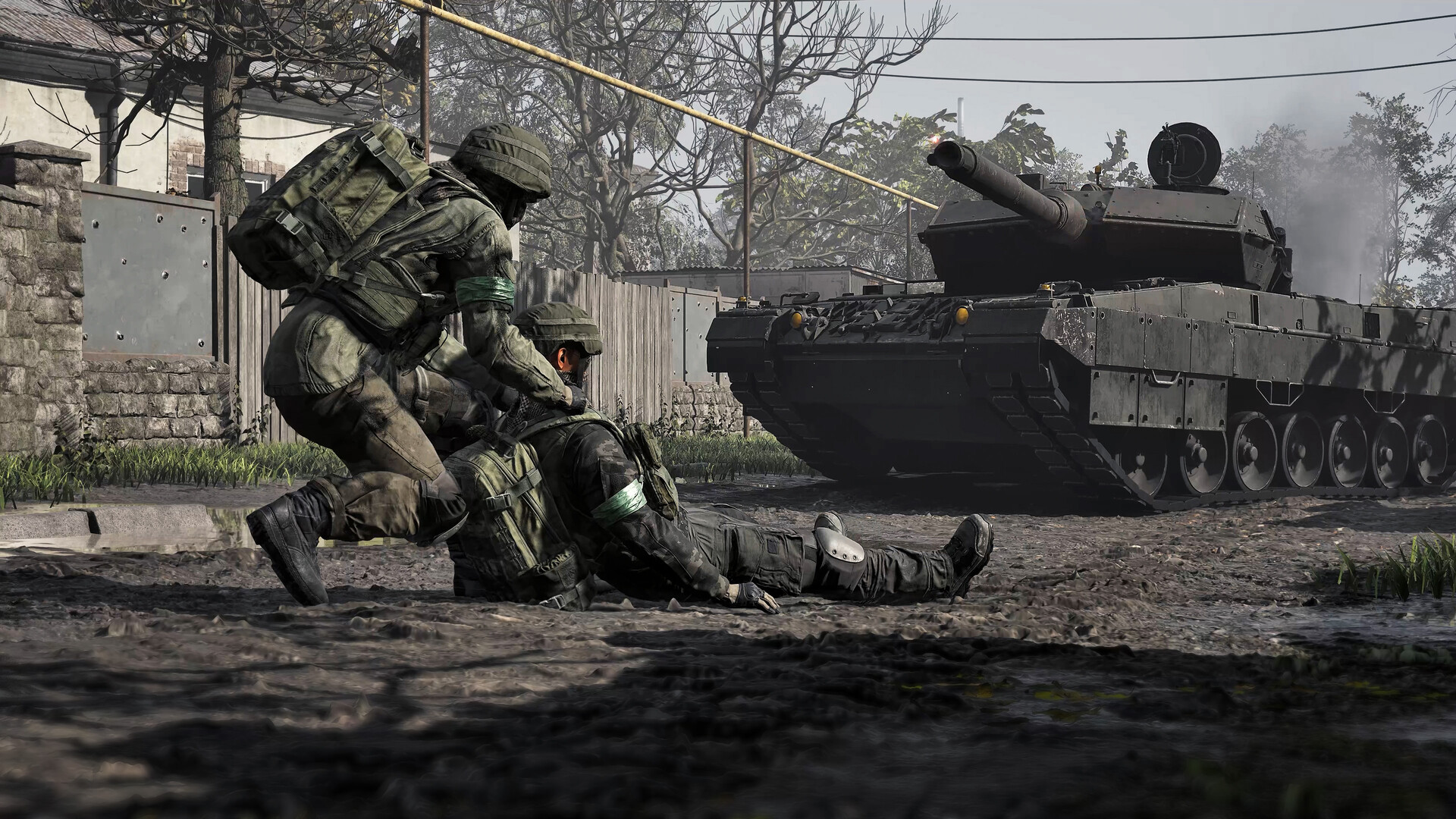
Official game screenshot · Team17. Publisher-provided public store media used to illustrate independent editorial discussion. Copyright remains with the respective rights holders; no redistribution license is offered.
State the squad’s job in one sentence
Before departure, name an immediate job such as moving infantry to a covered entry, supporting a friendly position or defending a route. Use the current squad intent feature when available, then make the actual destination clear to people joining later. An intent label helps selection but does not replace a map reference and a short explanation. Avoid announcing several incompatible jobs at once. If the driver thinks this is a supply run while passengers expect an immediate attack, the first stop becomes a disagreement in exposed terrain instead of a useful deployment.
Check the audience before sharing the plan
The official game description includes local proximity voice, so do not assume every spoken word is a secure team-wide message. Use the intended in-game communication channel and confirm who can hear you. Keep nearby voice useful and avoid drowning out movement or urgent warnings. If a microphone is unreliable, make shorter text or ping requests rather than repeating a long sentence over combat noise. Do not share account details or other private information in a public match. The goal is an understandable destination and action, not a constant commentary track.
Call a location, a fact and an action
Use a visible landmark, map reference or clear direction that your teammate can identify. Then give the observed fact and what you need: an enemy vehicle at a specific road bend, a request to stop behind the next building, or a statement that you are moving across a doorway. Distinguish what you saw from what you suspect. Saying a room may be occupied is different from claiming a confirmed opponent is inside. Update the call if the target moves; a perfectly phrased report becomes harmful when everyone continues watching a place that is no longer relevant.
Make transport requests before the vehicle leaves
Tell the driver how many people need a ride, the destination and whether the group needs a careful stop for dismounting. As a passenger, stay ready for the agreed arrival rather than opening a complicated inventory at the last moment. Announce an obstacle or hostile contact briefly enough that the driver can react. Do not give several contradictory directions while the vehicle is already navigating a narrow road. Let one person communicate the route and another report threats. A loud group can feel organized while making it impossible for the operator to hear the instruction that matters.
Coordinate crossing and observation
When infantry must cross an exposed lane, establish where the first mover will stop and who watches the most likely threat. Keep the crossing call short and confirm arrival. The observer should remain aware of the approach rather than staring only at the moving teammate. Avoid sending the whole squad through a doorway at once; a second angle or explosive can catch everybody in the same place. If the first mover discovers the destination is unsafe, communicate that immediately so the remaining players can stop. A revised instruction is more useful than silently continuing a failed plan.
Request medical or supply help precisely
State what you need and where you can receive it behind cover. Asking for help from the middle of an active firing lane does not tell a support player how to reach you. The person responding should confirm equipment and approach rather than promising an interaction they cannot perform. Protect the support action when possible and keep others from crowding the same entrance. Do not make false urgency claims just to attract someone to a minor resupply. Clear priorities let the group distinguish a casualty under immediate threat from a player who can wait for a safer pause.
Handle friendly mistakes without escalating the match
Mistaken fire, an awkward stop or a misunderstood route can happen, especially with new players. Give the relevant fact and the correction without turning voice chat into a personal attack. Season 02 introduced a victim-driven forgive or punish system for team kills; use the current prompt deliberately and report purposeful abuse through the game’s systems. Do not encourage retaliation or keep the squad occupied with an argument while the objective is being lost. A calm instruction about a friendly crossing or a changed route is more likely to prevent the next mistake than a long accusation.
Close the loop when the job changes
Announce when passengers are delivered, a position is no longer usable, supplies are exhausted or the squad must regroup. Other players may still be acting on the previous instruction. If you leave the group, transfer the immediate information someone else needs instead of abandoning a vehicle or unfinished task without explanation. After the match, identify one communication failure that affected play and choose a short rule to fix it. Examples include using the same landmark names, naming the dismount side or reserving voice space during a crossing. Keep the next rule simple enough to follow under pressure.
Your working checklist
Checkmarks stay in this browser when storage is available. They do not alter your game or connect to your account.
Put it into practice
- State the job and confirm the intended communication audience.
- Call a location, observed fact and immediate action.
- Confirm transport stops, crossings and support actions before commitment.
- Update stale information and end with one practical correction.
Before you finish
- Proximity voice should not be treated as automatically private.
- Differentiate a suspected threat from a confirmed sighting.
- Use current report and forgiveness tools rather than retaliation.
Common questions
Do I need to talk constantly to help?
No. Short, timely calls and clear pings are usually easier to act on than continuous narration.
What is the most useful transport call?
Give the destination, passenger need and planned safe stopping point before departure.
How do we improve after a confused match?
Choose one recurring communication error and a simple shared wording that corrects it next time.