WARDOGS Destruction Calls: Open a Route Without Ruining the Team Position
Destroying cover changes the battlefield for everyone nearby. Before using a destructive option, connect the intended opening to the infantry movement, observation or objective action it is supposed to enable, and warn teammates about the new exposure.
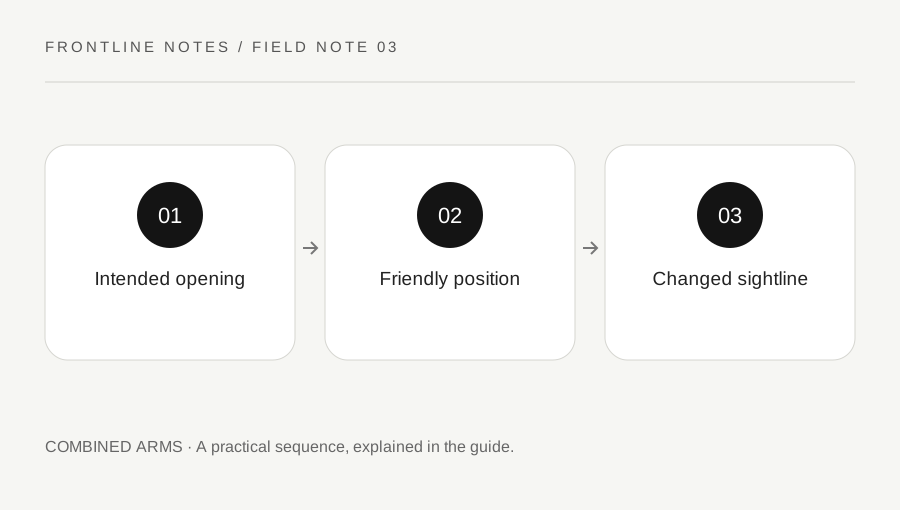
Original explanatory diagram. Examples illustrate a method or decision; they are not claims of personal testing.
State the benefit of the opening
WARDOGS presents destruction as part of its combined-arms sandbox. A collapsing obstruction can make movement possible, but destruction is not automatically progress. Begin with the benefit you want: remove an obstacle from a route, expose an enemy position or change the cover protecting a particular approach.
Keep the description concrete. "Open this side so infantry can reach the next building" can be assessed by the squad. "Destroy everything" provides no shared next action and makes it harder to notice that the opening also exposes friendly players.
Inspect the actual available equipment and surroundings. This guide does not promise that a particular weapon destroys every structure or give a fixed number of hits. Those details can change and depend on the current object. If the intended effect does not occur, update the plan from what is visible rather than spending indefinitely to force an assumed interaction.
Locate friendly dependence on cover
Before altering a structure, ask who is using it. A wall may be hiding a teammate's movement, screening a recovery attempt or preventing a second enemy team from seeing the current position. Removing it can solve one problem while creating another immediately.
For example, a squad plans to advance through an opening while another friendly player is using the same building to break sight from an adjacent road. A brief warning lets that player move first. Without the warning, they may experience the new exposure as an unexplained flank.
Use an identifiable landmark and direction in the call. Do not rely on a vague "breaking it" when several structures are nearby. Give teammates time to respond when the situation allows it. If immediate action is necessary, describe the change as soon as possible so they can stop depending on cover that no longer exists.
Link the change to a ready action
An opening has a limited benefit if nobody can use it. Check that the relevant teammates are positioned, aware and equipped for the next action. That does not require a long countdown; it requires agreement about what will happen after the terrain changes.
Suppose destruction reveals a lane toward the objective. One player can observe the newly exposed angle while others move between intact cover. If everyone rushes toward the opening simultaneously, the squad may concentrate in a predictable line without checking what the enemy can now see.
Reinspect the result. The final geometry may differ from the imagined route, and dust, debris or a new angle can affect the immediate decision. Do not continue a planned crossing purely because the demolition already happened. A useful call includes both the confirmed change and any remaining uncertainty: "Opening visible; far side still unchecked." That supports a deliberate follow-up rather than an automatic rush.
Account for the enemy receiving the same opening
The opponent can also use the route or sightline you created. Once your squad moves, consider whether leaving the opening unwatched threatens the position behind you. This is especially important when pressure can arrive from another team.
After the fight, review the intended benefit and the actual effect separately. Did the change expose the target? Were friendlies warned? Was the follow-up ready? Did the route remain useful after the first movement? These answers locate the coordination problem more precisely than labeling every destructive action effective because something fell down.
Practice with one clear objective in ordinary supported play. Avoid deliberate exploits or instructions that modify the game to force destruction. A good demolition decision leaves the squad with a better shared option and an accurate understanding of the altered terrain. Sometimes the best choice is to retain existing cover and use a different approach, even when a destructive tool is available and visually dramatic.
A practical checklist
Choices are saved in this browser. Reset them here or clear this site’s browser storage.
Questions that come up
Is destruction always an offensive advantage?
No. It can remove friendly protection or open another enemy approach. Evaluate both sides of the change.
Can we assume every building reacts identically?
No. Use the current game behavior. This guide does not prescribe universal damage or collapse values.
What should a destruction call include?
An identifiable structure, the intended change and the next action, followed by a confirmation of what actually changed.
References & scope
Background references checked on 18 October 2026. Worked examples and diagrams are original teaching material.