WARDOGS Community Servers: Check Rules and Match Conditions Before Joining
Choosing a community server is a practical match decision. Read the conditions, understand who operates the server and distinguish a local community rule from a restriction applied across WARDOGS before spending time troubleshooting or arguing about access.
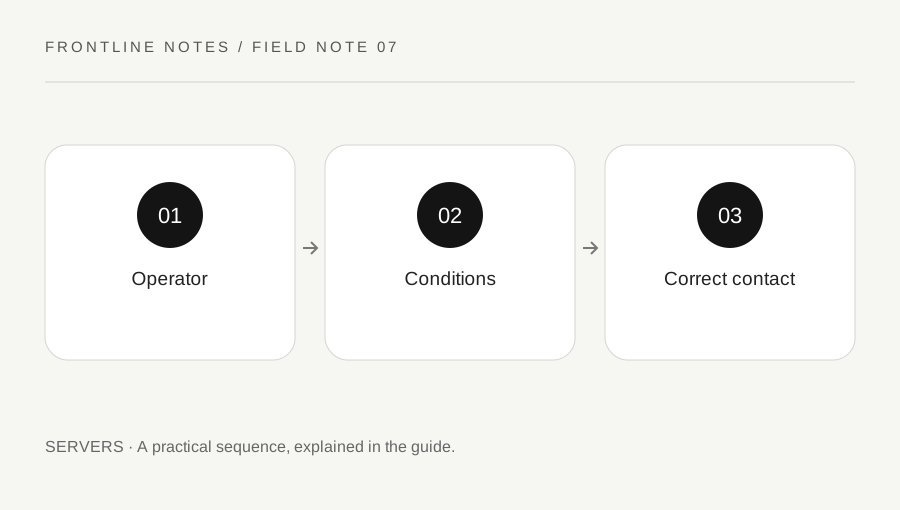
Original explanatory diagram. Examples illustrate a method or decision; they are not claims of personal testing.
Identify the server you are choosing
BULKHEAD explains that WARDOGS includes a server browser and community-run servers. A server name is a label chosen for that environment, not proof that every condition matches an official server or a server you used earlier. Begin with the details currently shown in the browser.
Record enough information to identify the place again: name, visible region or connection information, and relevant rule description. Avoid copying private account details into public notes. If a server's identity is ambiguous, do not assume a familiar-sounding name belongs to a community you already trust.
For example, two similarly named servers may have different operators or expectations. Confirm the community through the links presented by a source you can verify, rather than joining an unrelated external group because a stranger says it is required. No external service should need your Steam password or an authentication code simply to explain server rules.
Read rules as part of the match setup
Community operators can establish their own rules. Read those rules before committing to a long session, especially if you intend to play a particular role or bring friends. A restriction may affect the behavior the community expects even when the underlying game permits an action elsewhere.
Do not rely on rules remembered from a different server. If a condition is unclear, use the community's stated contact or moderation process to ask. Keep the question specific: what behavior is allowed in the current server, and where is the rule documented?
Suppose your group wants a relaxed learning session while the server expects organized objective play. The mismatch is useful to discover before everyone joins. Choosing another suitable server can be a better resolution than treating the operator's preferences as a technical fault. At the same time, community rules do not remove the game's broader conduct and enforcement requirements.
Separate local access from game-wide enforcement
BULKHEAD's enforcement policy distinguishes decisions made by community server operators from restrictions applied by the developer. The correct next step depends on which situation you actually have. Read the message and preserve its wording before drawing conclusions.
If one community server refuses access while others work, that observation suggests a different scope from being unable to play online anywhere. It is evidence about the problem's extent, not proof of the exact cause. Contact the relevant operator or official support through the appropriate documented route.
Do not attempt to bypass a restriction using a different account, altered client or misleading identity. Those actions can create an additional problem and do not establish whether the original decision was correct. A useful inquiry identifies the server and the message received, then asks which process applies. Avoid public accusations about administrators or other players when the available evidence only establishes that access failed.
Keep a small server note for future sessions
After a suitable session, record the server identity, the conditions that mattered to your group and where the rules were found. This is a practical memory aid, not a permanent certification of quality. Community ownership, rules and availability can change.
Before returning, check the current listing rather than automatically trusting the old note. Ask friends to confirm the same server details so the group does not split across similar names. If connection quality is poor, separate that observation from whether the rules and play environment fit your goals.
When reporting a problem, provide the server name, approximate time and the behavior or message observed. Keep private identifiers within the appropriate support process. A careful choice reduces confusion about where you are playing and who can address a problem. It also keeps a disagreement about one community from being mislabeled as a universal WARDOGS rule or a technical failure affecting every server.
A practical checklist
Choices are saved in this browser. Reset them here or clear this site’s browser storage.
Questions that come up
Can BULKHEAD overturn every community server ban?
Its policy distinguishes community operators’ decisions from developer enforcement. Read the current policy and contact the appropriate operator for a local decision.
Is a familiar server name enough to trust an external link?
No. Verify the destination through the community or official source you intended to use.
Does failure on one server prove a game-wide ban?
No. Record the message and scope before deciding which support or moderation process applies.
References & scope
Background references checked on 18 October 2026. Worked examples and diagrams are original teaching material.