WARDOGS After-Match Review: Improve Routes, Roles and Spending
A WARDOGS score screen cannot by itself explain why a team held ground or why a personal wallet fell. A useful review connects the result to decisions that can change next match: where you spent time, what a life cost and whether your support reached the objective. This is an original improvement routine using official mode and economy descriptions checked October 18, 2026. It applies to the Season 02 / Update 0.2.0 period and does not claim that a single statistic proves a player was the best teammate.
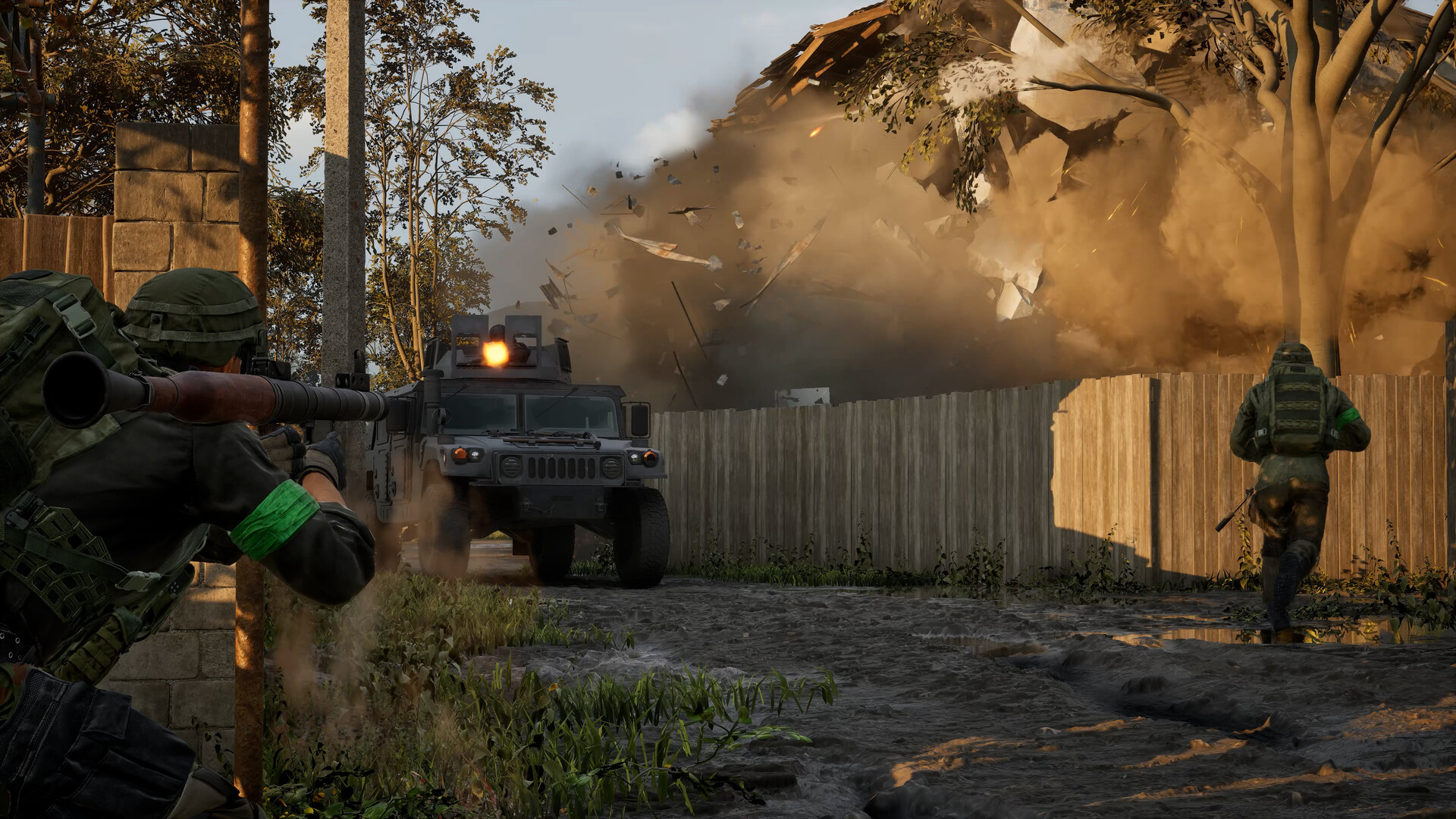
Official game screenshot · Team17. Publisher-provided public store media used to illustrate independent editorial discussion. Copyright remains with the respective rights holders; no redistribution license is offered.
Start with the territorial result
Recall where your team gained or lost useful presence rather than focusing immediately on eliminations. Was the group inside the Control Zone or fighting an entertaining but irrelevant battle outside it? Did a strong position have a route for reinforcements, or did it disappear once the first group died? A match can contain individually successful fights that do little for the objective. Identify one phase when the team’s plan connected arrival, survival and replacement, then one where that chain broke. That gives the review a concrete gameplay question instead of a vague judgment that teammates were bad.
Separate travel time from fighting time
Think about how many lives were spent walking alone, waiting for transport or arriving after the squad had already been eliminated. A player who repeatedly misses the group may need a better departure routine rather than a new gun. Mark the arrival location that worked and note why: usable cover, a nearby route inward or a driver who explained the stop. If a transport dropped people into a watched field, correct the landing plan. Travelling efficiently means reaching useful ground ready to act, not simply choosing the fastest vehicle or the shortest map line.
Review a death from the last safe decision
Pick one avoidable death and move the review backward. The final shot may be less important than the moment you left cover without a destination, re-peeked a known angle or opened the inventory in a doorway. If you were caught after a building lost a wall, the correction may be a fallback position rather than more armor. Keep the description factual and specific. Saying that an opponent had better aim might be true, but it does not identify a decision you can practise. Find the earliest point where a different action would have reduced the exposure.
Check whether the kit served its declared job
Compare what you bought with what you actually used. A specialist tool that never left the backpack may have been unnecessary, misunderstood or disconnected from the route. A cheaper weapon that repeatedly ran out of the correct ammunition suggests a preparation problem, not proof that all inexpensive gear is weak. Note which medical and utility items were useful and which were absent when needed. Keep successful parts of the setup familiar while correcting the limitation. Replacing everything after each bad match makes it difficult to learn which change improved the result.
Compare wallet results honestly
Read the current balance and remember the full cost of weapons, equipment and any vehicles. Do not focus only on the largest reward notification while ignoring several purchases that preceded it. Distinguish a planned expensive attempt from a series of frustrated automatic rebuys. If a support role worked, note the actual team task that created value rather than promoting one lucky payout into a universal farming claim. Official Early Access updates can alter the economy, so record the build context for any numbers you want to compare later. Use current results as evidence, not a promise about future matches.
Review communication as a shared interaction
Choose a moment when information arrived too late or was misunderstood. Was the dismount point unnamed, the threat report stale, the medical request exposed or the squad intent different from the actual plan? Ask for one correction in neutral language. A shorter call, common landmark or clear confirmation can be enough. Avoid using a post-match discussion to repeat every mistake another player made. That tends to reduce cooperation while leaving the next match’s procedure unchanged. If there was purposeful abuse, use the game’s report tools and preserve relevant facts rather than encouraging retaliation.
Read updates before diagnosing a changed interaction
When something feels different after a patch, compare it with official announcements. Season 02 changed several areas including controls, equipment behavior and economy, so an old habit can fail for a real version reason. Do not assume every unusual result is a new secret mechanic or that every missed interaction is a bug. Check the current prompt and settings first. For a reproducible problem, record the platform, installed build, item and steps that produce it. A useful official support report describes what happened without claiming a cause that has not been established.
Set one measurable practice task for the next match
Choose a behavior you can observe: arrive with the squad, make one safe support interaction, leave a fallback when using destructible cover, or inspect the rebuy preview before every purchase. Avoid a target such as win every fight, which depends on many things outside the practice task. Keep the kit and role simple enough to focus on the change. Afterward, check whether the behavior occurred and whether it solved the original issue. Improvement can be a cleaner route or a better coordinated arrival even when the final team result remains a loss.
Your working checklist
Checkmarks stay in this browser when storage is available. They do not alter your game or connect to your account.
Put it into practice
- Compare objective presence and arrival routes before judging eliminations.
- Trace one loss to the last correctable decision.
- Inspect kit usefulness, spending and any current version changes.
- Set one observable practice task for the next match.
Before you finish
- A high elimination count does not explain every objective contribution.
- Avoid turning one payout or one defeat into a universal claim.
- A review should end in an action you can practise, not a list of blame.
Common questions
What should I review first after losing?
Check where your team could or could not maintain useful presence, then examine the arrival and reinforcement chain.
How many changes should I make for the next match?
Start with one observable behavior so you can tell whether it addressed the problem.
Should I trust a pre-patch guide when the interaction feels different?
Recheck official announcements and the current prompt, particularly after a large Early Access update.